Angiorunangiographic runs from CT

For interventional radiologists

Angiographic runs from CT.

Load a CT angiogram, pick the vessel you are going after, and Angiorun lays out the run before you are in the room:

  1. 1The working angle. C-arm views ranked by foreshortening and overlap for that vessel.
  2. 2A catheter and an injection. A suggested shape and size from the device catalog, and a rate and volume that fill without reflux in the simulation.
  3. 3The run itself. Simulated DSA from arterial fill through blush to venous return.

A full fluoroscopic simulation: fluoro and DSA at any C-arm angle, aortic flush or selective, computed in your browser. Abdomen today; head, lungs and legs in progress.

Invite-only while it is a personal tool. Free. Runs in your browser; your CT is never uploaded.

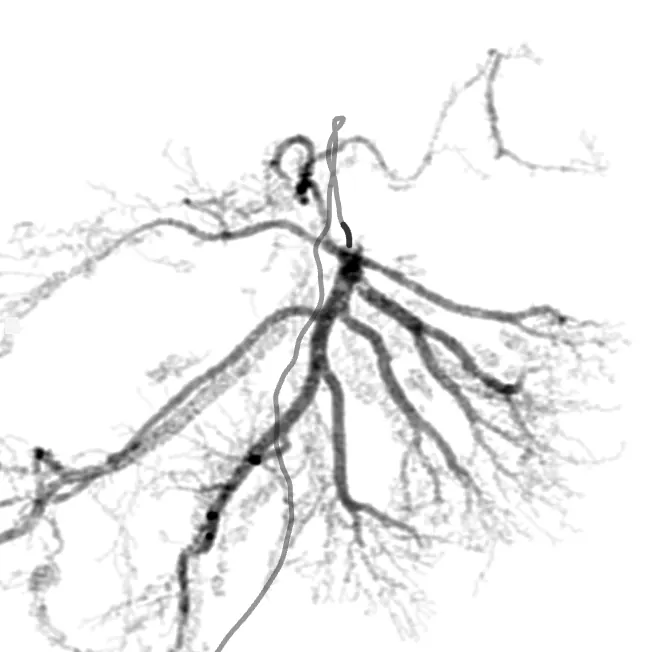
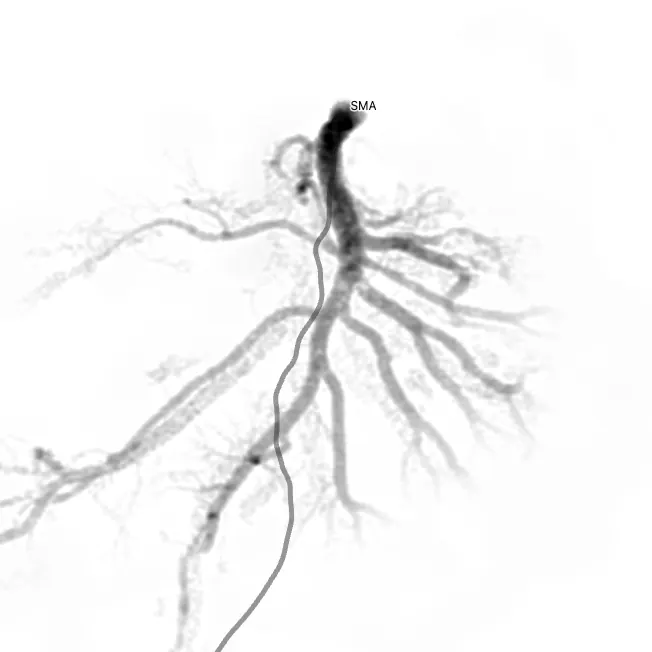
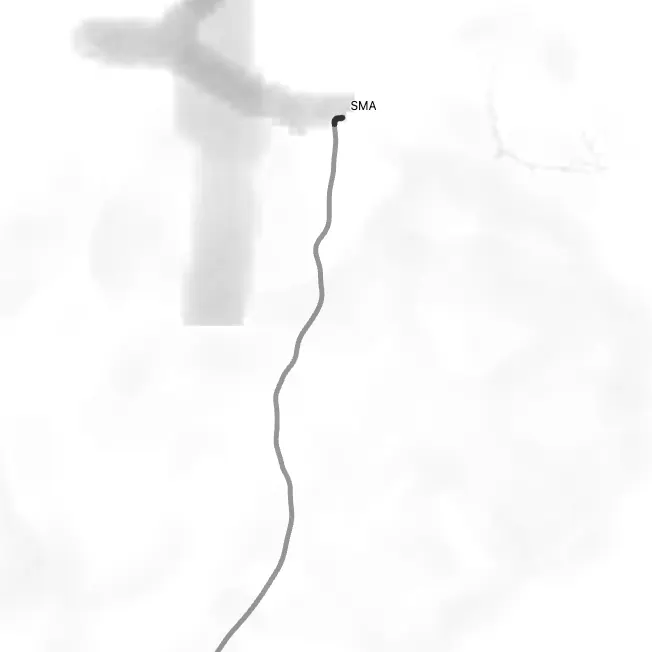
Selective SMA run · right femoral4 ml/s × 12 ml

AP · CRAN 0 Tip · SMA
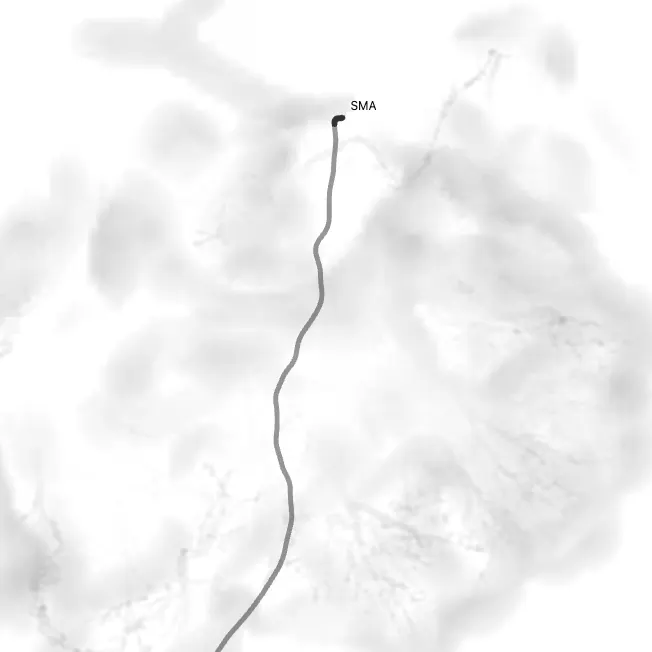
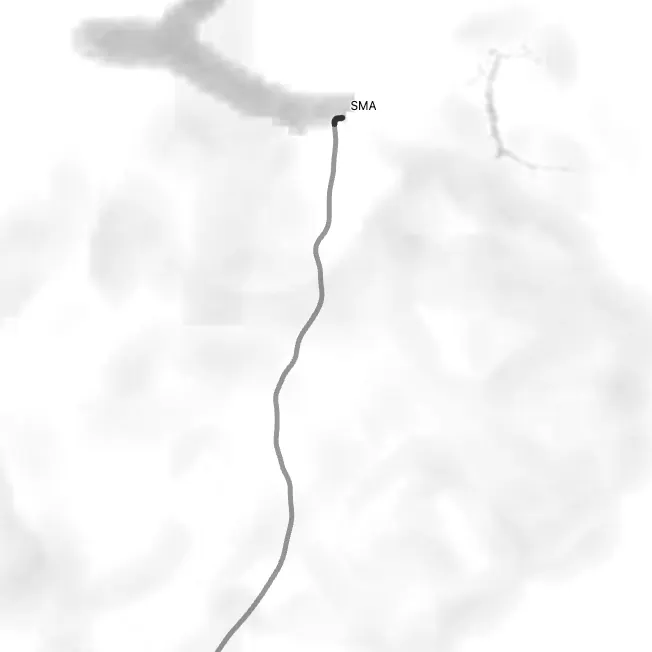
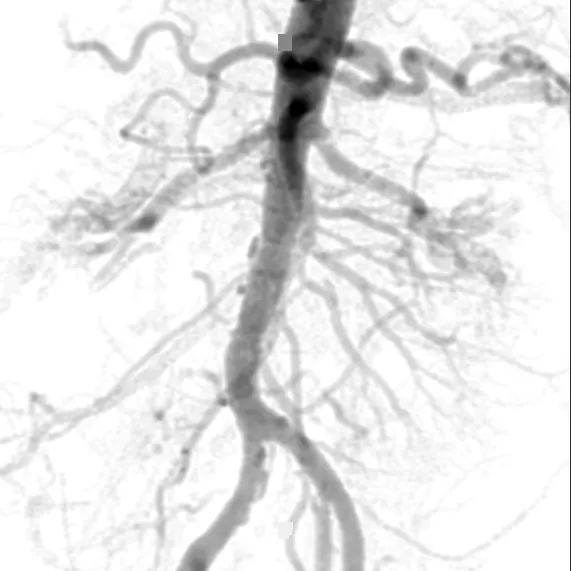
Simulated DSA of a selective superior mesenteric artery injection from a public CT angiogram, catheter from the right femoral artery.
ArterialBlushPortal return
  • Drag to swing the C-arm
  • Click a branch to run it
  • D for fluoro / DSA

Simulated from a public CTA (AVT R9). No angiogram was acquired. Every frame is computed from the CT.

What you get

One page per target vessel.

The pre-procedure report puts the three answers you want before a selective run on one page. Read it on a phone between cases, or print it for the room.

  1. 1

    Angle

    The C-arm view with the least foreshortening of the target, and two runners-up, each with its image.

  2. 2

    Catheter and rate

    A suggested catheter shape and size with the reason, and an injection rate and volume. Suggestions, not orders: you choose.

  3. 3

    The run

    The route from access to tip with proposed branch names, and the simulated run with its timeline.

See the full sample report

Selective SMA · pre-procedure reportAVT R9 · public CTA · sample
1 · Working angle
LAO 20 · CRAN 0
Least foreshortening of the SMA trunk and jejunal arcade
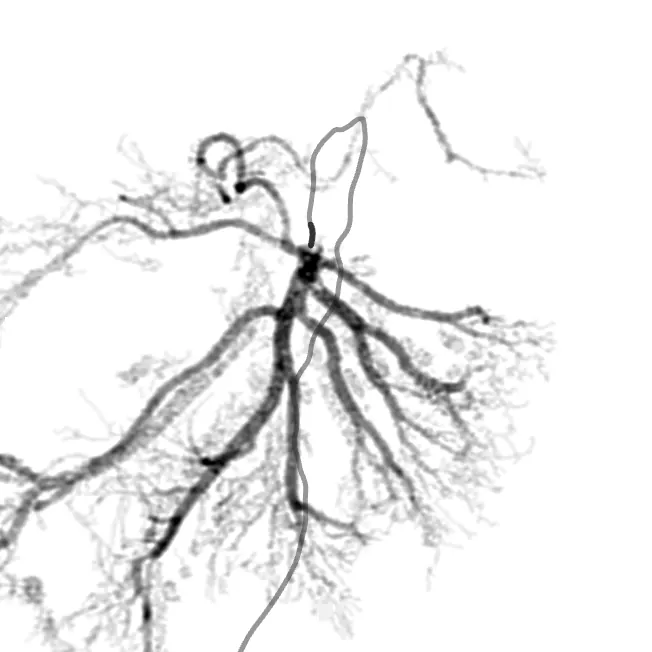
Simulated DSA of the SMA at LAO 20
1 LAO 20
Simulated DSA of the SMA at AP
2 AP
Simulated DSA of the SMA, early arterial frame
3 RAO 10
2 · Catheter and injection
5 Fr SOS Omni 2
or 5 Fr Cobra 2 · right femoral · caudally angled SMA origin
Injection
4 ml/s × 12 ml
No simulated reflux at the tip up to 5 ml/s
3 · Route
R CFA›R CIA›Aorta›SMA›ileocolic ?
? proposed name, not yet confirmed
The run · 20 s at 3 frames/s
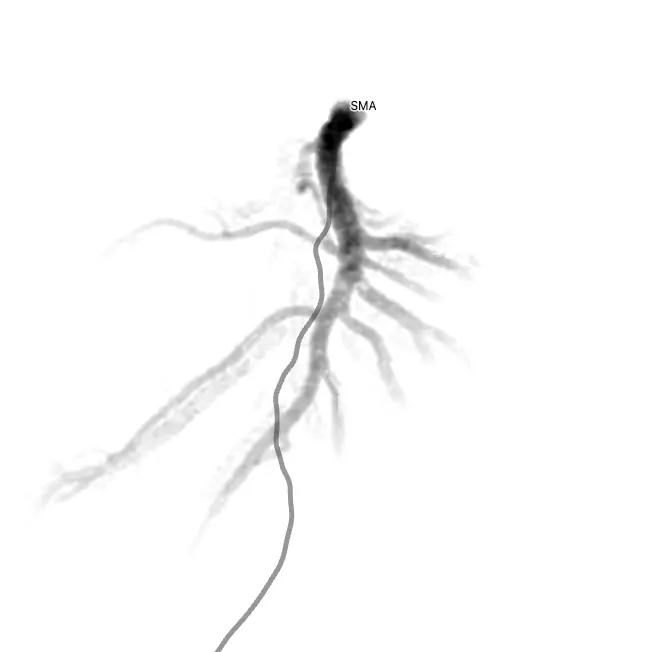
1 s
3 s
8 s
12 s
16 s
Branches fill by 2 s · blush peaks 8 s · portal vein 12 s
All images simulated from a public CTA. Personal, unvalidated tool; not for diagnosis or treatment decisions.Angles and catheter in this sample are illustrative.
How it works Available now

From CTA to run in three steps.

Everything below runs in your browser on the graphics card (WebGPU). A CT you open is read on your computer and never leaves it.

  • Abdomen aorta, celiac, SMA, IMA, renals, iliacs Available
  • Head ICA and MCA runs from a head CTA In progress
  • Lungs pulmonary angiography from a CT pulmonary angiogram In progress
  • Legs lower-extremity runoff In progress
  1. 01

    Open a CT angiogram

    A DICOM folder or NRRD/NIfTI file from your disk, or one of the public example cases. Angiorun traces the arterial tree from the aorta outward and proposes a name for each branch.

  2. 02

    Click a branch

    The catheter routes there from right or left femoral access. The tip gets its proposed name, marked ? until you confirm it.

  3. 03

    Run it and swing the C-arm

    DSA or fluoroscopy, selective or aortic flush. Drag to change LAO/RAO and CRAN/CAUD; the view finder ranks the angles that open your target.

Simulated SMA DSA, AP
DSA · APSimulated from a public CTA
Simulated SMA DSA, LAO 20
DSA · LAO 20Simulated from a public CTA
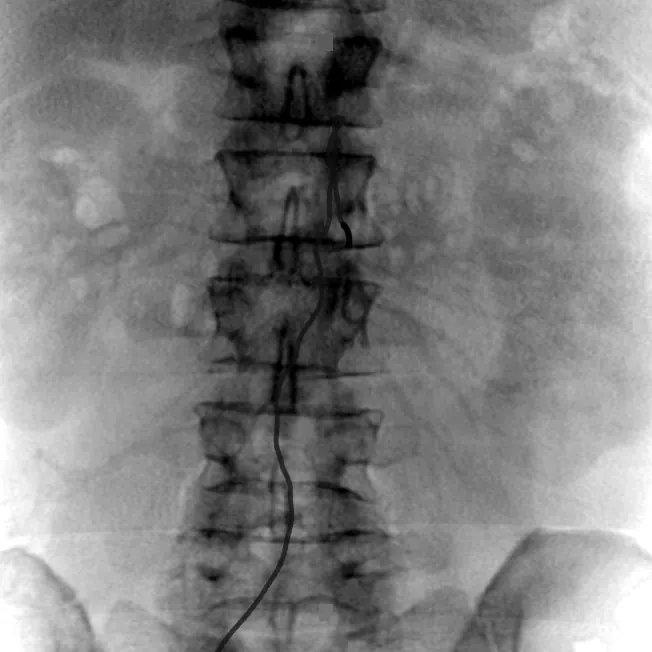
Simulated fluoroscopy with the catheter in the SMA, AP
Fluoro · APSimulated from a public CTA
Simulated abdominal aortic flush, AP
Aortic flushSimulated from a public CTA

Planning ahead Planned

The plan is waiting at the lab.

Where Angiorun is going: the CTA your patient already had is sent to Angiorun before the case, and the report for each target vessel is ready when you walk in.

  1. Before the caseCTA is done

    In the ED or clinic, as it is today.

  2. AutomaticallySent to Angiorun

    From PACS, with no one uploading by hand.

  3. Minutes laterReport per vessel

    Angle, catheter and rate, and the run, for each target.

  4. On your phoneYou review it

    Confirm the names, pick your views, then scrub in.

  • GI bleed embolization
  • Prostate artery embolization
  • Uterine artery embolization
  • Hepatic chemo- and radioembolization mapping
  • Trauma embolization
  • Renal and mesenteric work

Vendor-neutral by design. The plan comes from the CT, not from the angio suite, so it reads the same in every room you work in, whoever built the C-arm.

Not available yet. The automatic path needs hospital integration, validation and regulatory clearance. Until then, Angiorun is the personal tool above, used with public or your own de-identified cases.

Who it is for

Built by an interventional radiologist, for IRs.

Attendings

Rehearse a bleed, a PAE or a mapping run on the patient's CTA: which catheter, which angle, what the run should look like.

Fellows and residents

Learn selective anatomy and C-arm angles on real public CTAs, one run at a time, without radiation.

Reference, inside the app

Devices: catheters, wires, coils and plugs, and what fits through what. Guidelines: SIR/ACR summaries (antithrombotics, antibiotics, contrast, radiation, sedation).

In the app for now; sign-in required.

Privacy

Your CT stays on your computer.

Angiorun opens files from your disk and processes them in memory, in the browser. It sends no image data anywhere, and its content security policy blocks connections to any other server.

Identifiers are shown once so you can confirm the study, then dropped. Nothing is stored unless you opt in. This site has no cookies, no analytics and no third-party scripts.

Limits

What Angiorun is not.

  • A personal, unvalidated tool. It is not a medical device and has no FDA clearance. Do not use it for diagnosis or treatment decisions.
  • Every image is simulated. Runs are computed from CT; they are not angiograms and can differ from what you will see on the table.
  • Names and suggestions are proposals. Branch names carry a ? until you confirm them. Catheter and injection suggestions come from a reviewed rule table, not from outcome data.
  • Flow is modeled, not measured. Timing of blush and venous return is typical physiology applied to the traced tree.

Access

Invite-only, free.

Request access

  1. Send your name, role and institution with the form.
  2. If approved, you get an invitation email with a temporary password.
  3. Sign in, set a password and an authenticator app.

No patient information, please. This form asks only who you are.

Already invited

The app lives at angiorun.app and asks you to sign in.

Needs a desktop browser with WebGPU: current Chrome or Edge on Windows or macOS. Reports open on any phone.